
3 minutes read
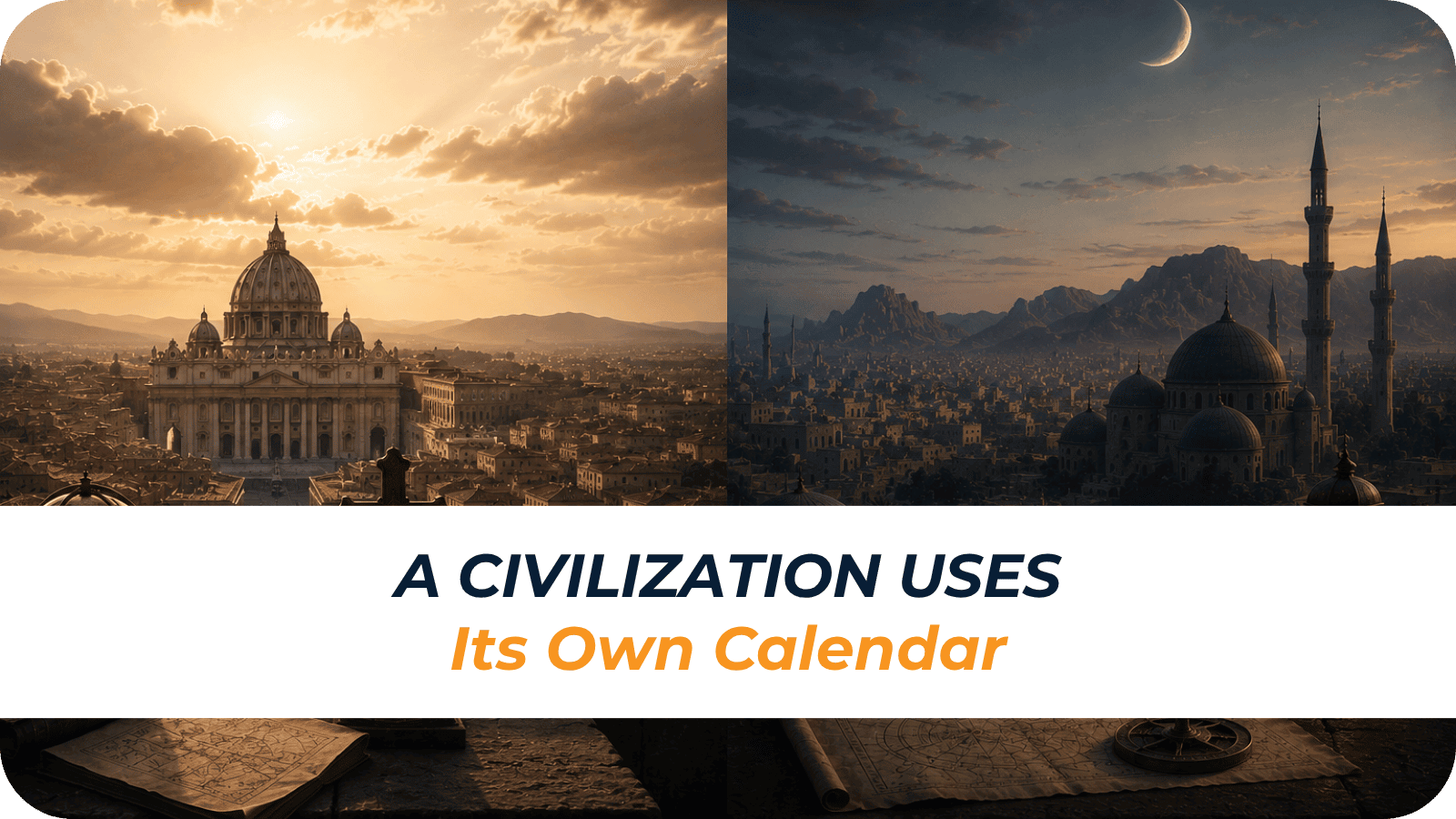
You either follow the sunnah of Pope Gregory XIII or the sunnah of Umar ibn al-Khattab رضي الله عنه. There is no neutral position. Every time you write a date, you are operating within a civilizational framework.
The Hijri calendar was not created as a religious ornament. It was established by Umar رضي الله عنه as the calendar of a civilization that governed, traded, educated, judged, and led.
Unlike the Gregorian calendar, the Hijri calendar is directly tied to the life of every Muslim. Yet most Muslims know today's Gregorian date and have no idea what Hijri month they are living in.
Muslim Founder Brief
A daily briefing on Muslim ownership, responsibility, and disciplined building.
How the Hijri calendar shapes worship
Allah tied many of our acts of worship to the lunar calendar.
- Ramadan
- Hajj
- Zakat
- Sacred months
- Days of Eid
Our children know January, February, and December. Many barely know Muharram, Rajab, Sha'ban, or Dhul Hijjah. That should concern us.
A calendar is not just dates
Today, the Hijri calendar is often remembered only for Ramadan and Eid. But civilizations do not rise by using their own calendar a few times a year. They rise when their systems are built on it.
- Schools use it
- Businesses use it
- Organizations use it
- Contracts use it
- Families use it
- Children think in it
The goal is not the calendar itself. The goal is the establishment of Allah's justice on earth. But the widespread use of the Hijri calendar is both a result of that justice and an indicator of it.
When a people lead, their systems become the standard. When a people follow, they adopt the systems of others.
Muslim Founder Academy
Everything you need to build your business the Muslim way - from idea to institution.