
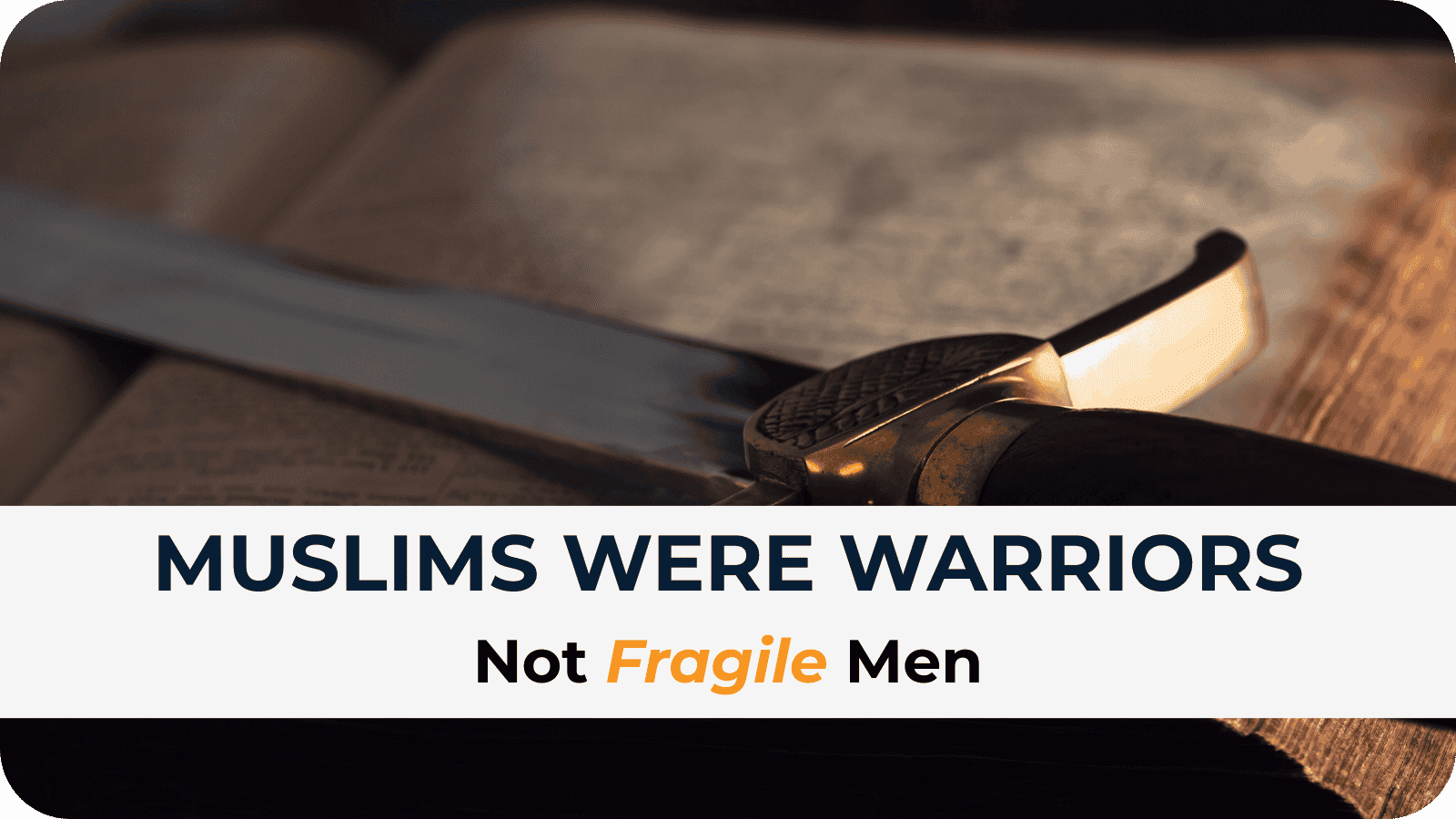
Muslims Were Warriors, Not Fragile Men

01/14/2026 03:01 PM
Muslims Were Warriors, Not Fragile Men

Most Muslims forget that our early generations were not fragile. From scholars to traders, from judges to soldiers, Muslims were disciplined and anchored. They were not reckless. They were warriors in the truest sense. That does not mean they were violent. It means they combined physical preparedness, moral courage, and spiritual humility in a single integrated life. This balance is what made them formidable and what made their communities resilient.

Today, too many Muslims retreat when pressure rises. We negotiate values to fit convenience. We soften our speech when the truth is costly. We accept dependency rather than build capacity. This is not our tradition. Reclaiming the warrior spirit is not an appeal to aggression. It is a call to disciplined strength, moral clarity, and economic independence.

Strength Was Part of Scholarship and Trade

The early Muslims did not separate learning from strength. Their biographies show a pattern. Traders like Abdur-Rahman ibn Awf (رضي الله عنه) combined capital with readiness. He attended major battles with the Messenger of Allah (صلى الله عليه وسلم). He carried wealth and armor. Wealth did not make him soft. It increased his ability to serve and to protect the community when called.

Scholars were also practitioners of discipline. Imam al-Shafiʿi (رحمه الله) practiced archery and physical training with the same seriousness he applied to jurisprudence. Strength was not a hobby for him. It was preparation. Ibn Taymiyyah (رحمه الله) did not only write; he stood firm during public trials and confronted invading forces. His courage revived communities because it came from conviction, not from appetite for fame.

When knowledge is divorced from capacity, the community loses a vital defense. The early model is clear. Learning anchors conviction. Strength protects integrity. Trade supplies resources to act. These elements function together.

Firm by Day, Humble by Night

A common misconception is that warriors are unfeeling. The early generations destroy that myth. Those who were unmovable by day were often the most humble at night. They wept alone before Allah (سبحانه وتعالى), seeking forgiveness and inspecting intentions. Their discipline was paired with fear of accountability.


This double posture, strength in public, humility in private is what made their strength moral. They were not driven by ego. They were driven by duty. That made their firmness principled and their deterrence ethical. The enemy confused this moral firmness with cruelty, but in reality the early Muslims were emotionally disciplined and spiritually aware.


For modern Muslims, cultivating the same balance means training the body and the mind, and sustaining a private life of accountability and self-correction. Strength without humility becomes arrogance. Piety without capacity becomes vulnerability.

What a Warrior Means in Islam

A warrior in Islam is defined by discipline and justice, not by unchecked violence. Practical attributes include the following.

Physical preparedness. The body is a trust to be maintained, not ignored. Physical readiness enables endurance, presence, and the ability to protect what matters.

Moral courage. Speaking truth when it costs reputation or income. Refusing to compromise core principles for short-term gain.

Emotional control. Managing impulses and avoiding fragility. Resilience in disappointment and strategic patience in setbacks.

Economic independence. Building means of provision so choices are not coerced by necessity. This is why entrepreneurship and asset creation matter.

Justice. Applying strength only to uphold rights and to resist oppression. The warrior’s sword, if any, is used to preserve justice, not ego.

These attributes are practical. They are not performative. They enable responsible leadership, robust communities, and markets that protect dignity.

Why Founders Need the Warrior Mindset

Entrepreneurs and founders especially must adopt this integrated mentality. Building a business often presents moral and financial pressure points. Deals will tempt compromise. Contracts will offer short-cuts. Markets will reward expedience.

A founder with a warrior mindset will stand firm in such moments. He or she will walk away from contracts that require dishonesty. They will refuse revenue that undermines ethics. They will structure their business to withstand short-term shocks and to preserve the dignity of employees and customers.

Softness produces fragile firms. Fragile firms create dependent communities. That dependency is a strategic vulnerability at the community level. The opposite is true as well. Firms built with discipline, justice, and financial independence become foundations for generational stability and institutional continuity.

Practicing Strength as Amanah

Strength in Islam must be treated as amanah. That changes the orientation. Amanah implies responsibility. It implies accountability before Allah (سبحانه وتعالى) and before people. When strength is seen as a trust, the default choices change.

Practical steps to internalize this view include the following.

Train the body with consistency. Regular physical exercise is a form of stewardship.

Build skills that compound. Commit to a craft long enough to develop expertise that cannot be easily replicated.

Create financial buffers. Save and invest to avoid coercion by immediate needs.

Cultivate moral routines. Daily habits of self-examination, sincere dua, and accountability partners keep superiority from becoming arrogance.

Practice disciplined speech. Speak truth with wisdom, avoiding both cowardice and provocation.

Each of these steps is part of a discipline that transforms personal resilience into communal capacity.
The early Muslims were formidable because they integrated strength with humility. They were warriors in discipline and guardians of justice. They trained the body, disciplined the soul, and used wealth to serve the common good.

Rebuilding our communities and economies requires the same stance. Strength must be reclaimed as amanah. Entrepreneurs must adopt the warrior mindset in order to build firms that last and societies that stand. The question for every believer is simple. Will strength make you more dependable, more humble, and more responsible, or will it simply become another source of vanity?