
3 minutes read
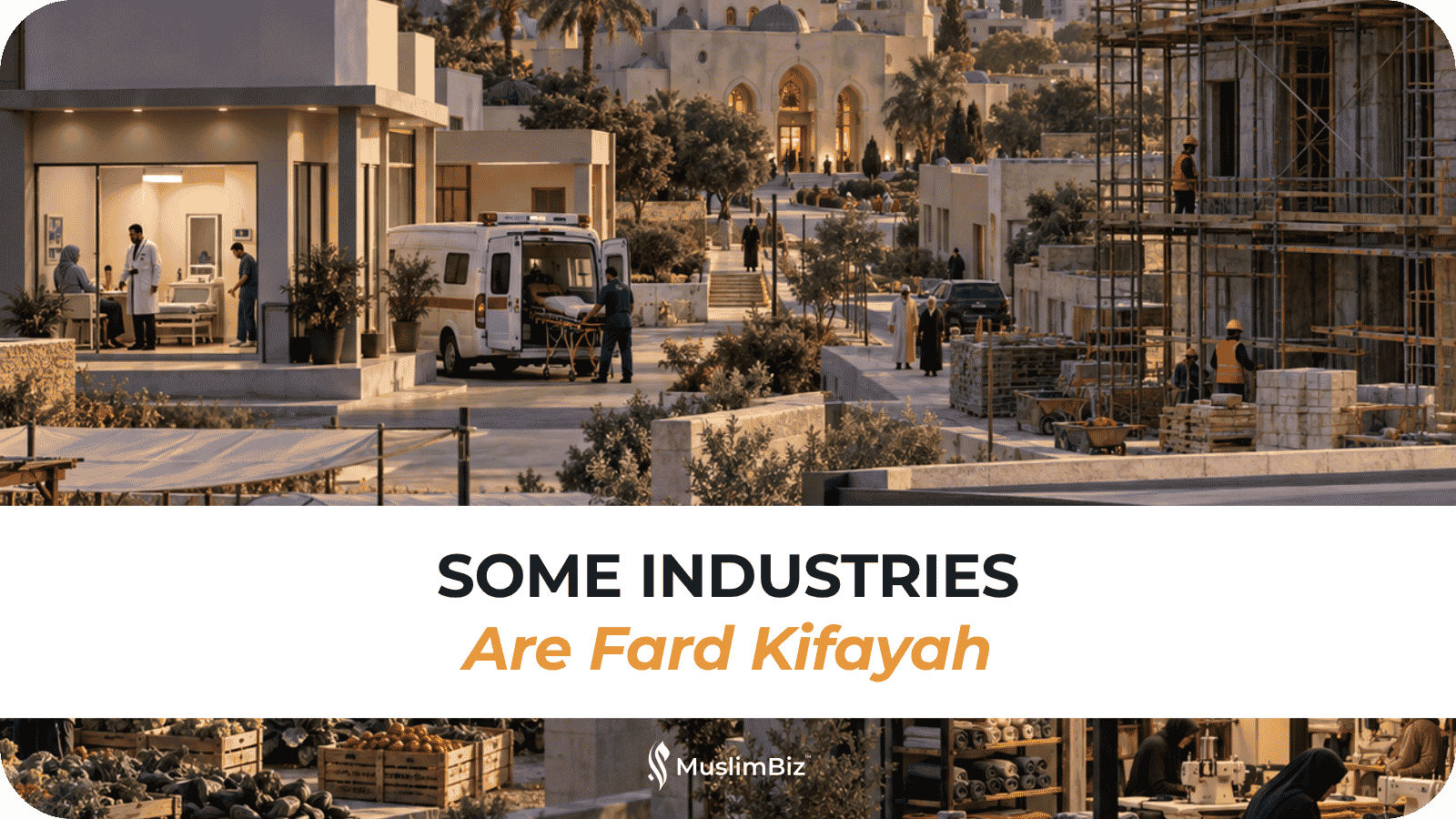
Most Muslims understand farḍ ʿayn: obligations every individual must fulfil, such as salah and fasting Ramadan.
But farḍ kifāyah is different. It is a communal obligation. If enough people fulfil it, the obligation is lifted from the rest. If nobody fulfils it, the community shares the blame.
We often associate this with janāzah, but the scholars discussed a much wider range of communal needs.
Muslim Founder Brief
A daily briefing on Muslim ownership, responsibility, and disciplined building.
When an Industry Becomes an Obligation
Imam al-Ghazālī رحمه الله included medicine, arithmetic, agriculture, weaving, governance, cupping and tailoring among knowledge and industries a society may need.
Ibn Taymiyyah رحمه الله similarly mentioned agriculture, weaving and construction, explaining that these can become obligatory when there is a genuine need.
Shaykh Ibn ʿUthaymīn رحمه الله stated the broader principle:
“Whatever the general interests of the Muslims cannot be maintained without is from the communal obligations.”
He applied this to areas such as medicine, industry, carpentry and blacksmithing.
The principle is simple: a community cannot function without certain capabilities, so those capabilities cannot simply be left for someone else to develop.
Sometimes Building Is More Than Business
This changes how we think about entrepreneurship.
Starting a company is not always about becoming wealthy, selling the business, and retiring early.
Sometimes the Ummah simply needs someone to build.
If Allah سبحانه وتعالى has given you the knowledge, resources and opportunity to develop something the Muslim community genuinely needs, your business may serve a purpose much larger than profit.
The question is not only:
Muslim Founder Academy
Everything you need to build your business the Muslim way - from idea to institution.