
3 minutes read
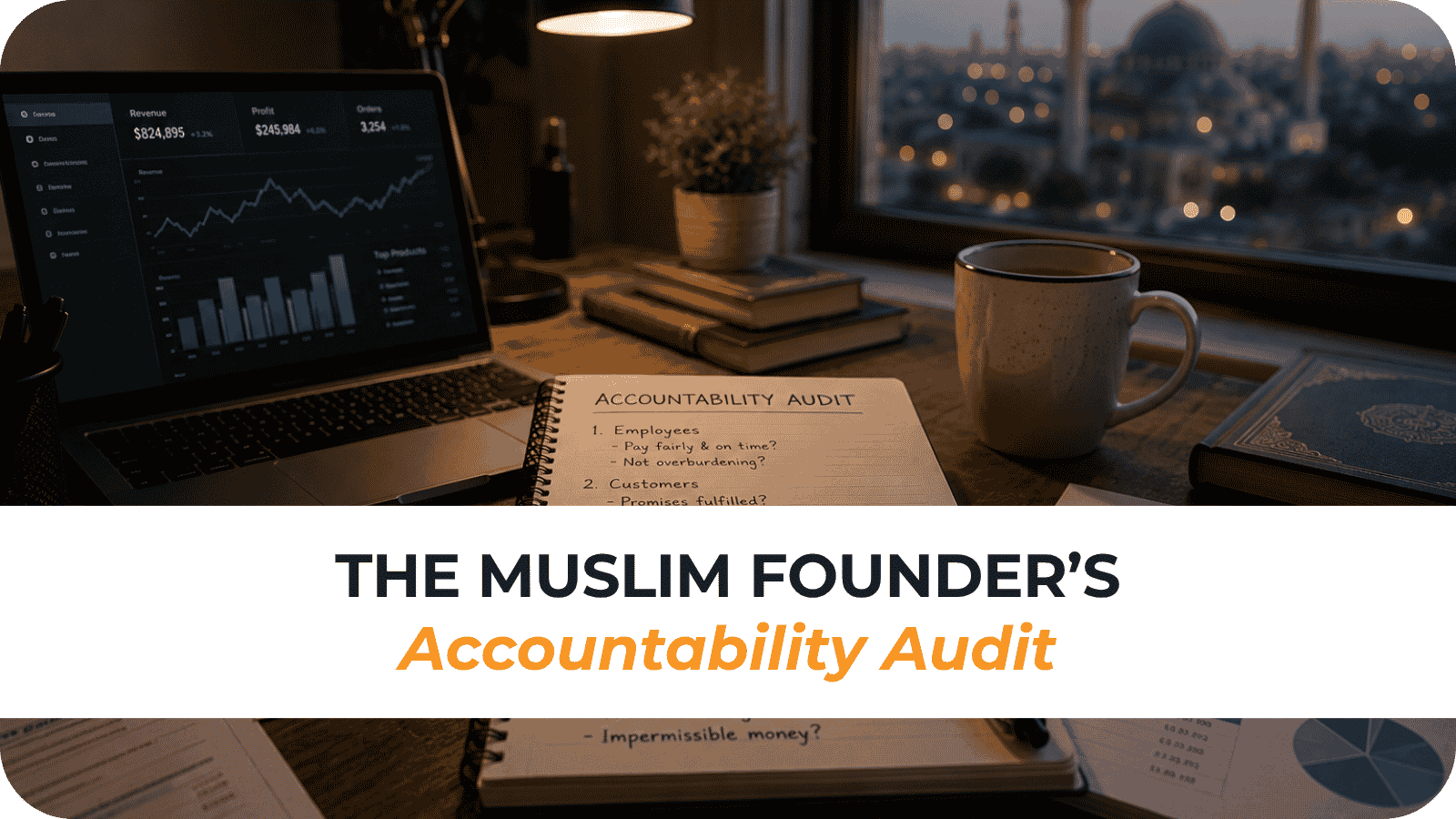
Business is one of the most complex activities a person can undertake. Because of this complexity, mistakes are inevitable. Islam does not require perfection. But it does require accountability.
Umar ibn Al-Khattab رضي الله عنه said:
"Take account of yourselves before you are taken to account, and weigh yourselves before you are weighed."
(Muhāsabat al-Nafs)
The Muslim founder should not wait until the Day of Judgment for his first audit. He should audit himself regularly.
Muslim Founder Brief
A daily briefing on Muslim ownership, responsibility, and disciplined building.
Five areas of accountability
Did I pay them fairly and on time?
Did I burden them beyond what was reasonable?
Did I fulfill my promises?
Did I deliver what I sold?
Were the terms clear and understandable?
Did I knowingly include unfair conditions?
Did I disclose known defects?
Did I exaggerate benefits?
Did I use riba-based financing?
Did I accept money tied to impermissible conditions?
These are worship questions
These may appear to be business questions. In reality, they are questions of worship. Questions of accountability. Allah سبحانه وتعالى says:
"Then surely, you will be questioned that Day about the delights." (Surah At-Takathur 102:8)
Every transaction, every promise, every condition is something you will answer for. Not to the market. Not to your competitors. But to Allah سبحانه وتعالى.
What would change in your business if you reviewed these five questions as seriously as you review your profit and loss statement?
Muslim Founder Academy
Everything you need to build your business the Muslim way - from idea to institution.